Core Differences in Corrosion Resistance
Although 304 and 316 stainless steel are widely used in daily life, their corrosion resistance differs significantly. The key difference lies in the molybdenum content: 316, containing 2-3% molybdenum, offers 3-5 times the resistance to chloride ion corrosion as 304 stainless steel, which does not contain molybdenum.
Practical Steps for Chemical Testing
1. Purchase a Testing Kit
Purchase nickel-molybdenum testing solution from a hardware store or online platforms such as Amazon.
2. Sample Pretreatment
Clean the stainless steel surface with alcohol to remove oil stains.
Lightly sand the test area with 400-grit sandpaper to expose fresh metal.
3. Test Procedure
Apply 2-3 drops of reagent to the surface.
Let it sit for 2-5 minutes to observe the chemical reaction.
4. Result Interpretation
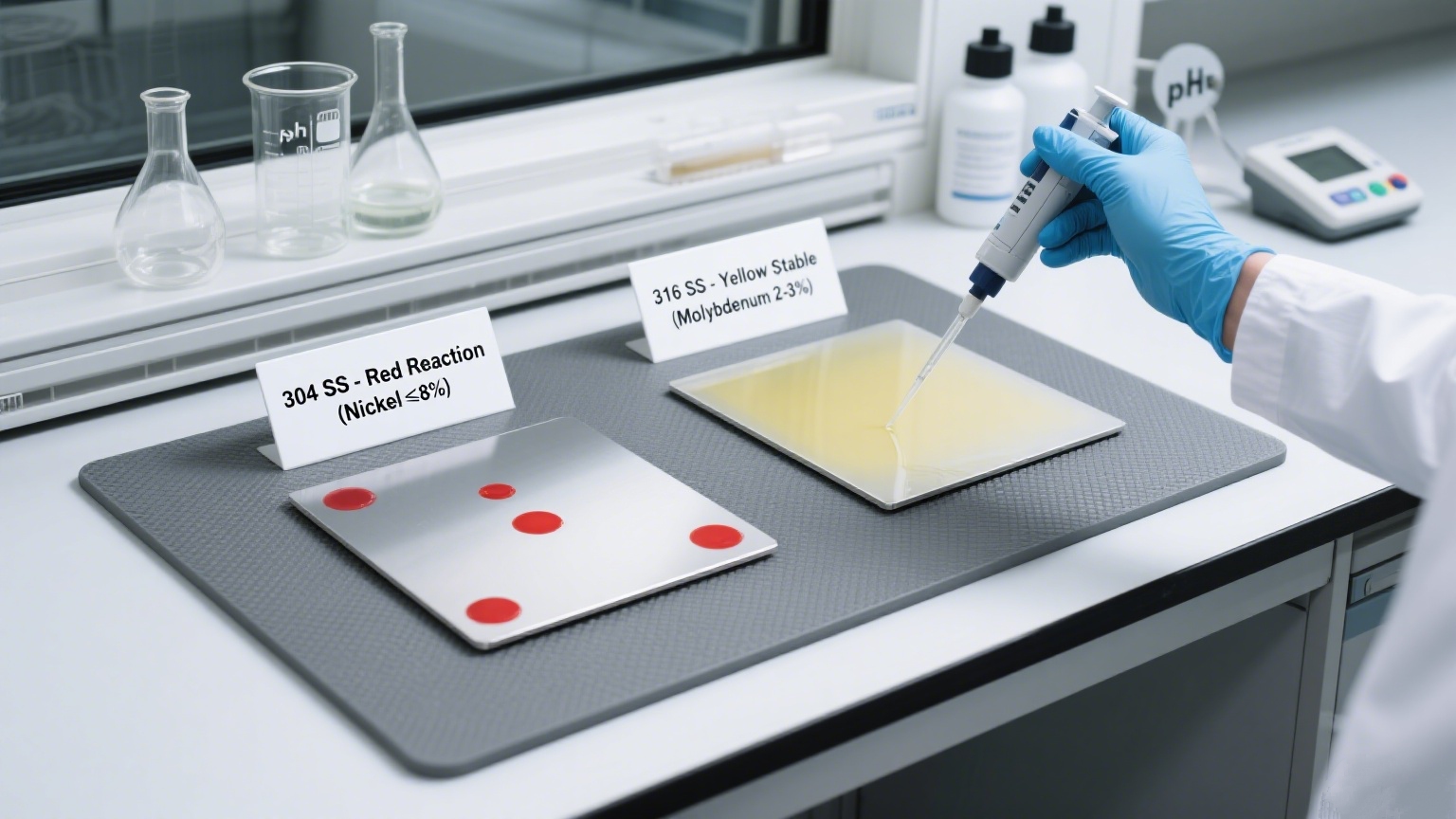
304 stainless steel: The liquid turns bright red, indicating a low nickel content (≤8%).
316 stainless steel: The liquid remains yellow or light brown, indicating a high nickel and molybdenum content.
Comparison of Actual Applications
304 is suitable for: Non-corrosive environments such as kitchen utensils and indoor railings.
316 is suitable for: Marine equipment, coastal construction, chemical processing, and other applications requiring high chlorine resistance.